I have been feeling anxious on behalf of our guests this week. Those who arrived on Friday last week will have enjoyed a sunny evening and a sunset, and then the miserable weather set in. Heavy rain last night, but we gratefully awoke to sunshine and blue skies.

The tractors are ready and waiting for the ground to dry so that Farmer can start making late cut bird friendly silage. We have to wait until September 1st until we cut it. Lots of odd jobs were caught up with, while he waited for the weather to improve, including hiring a pressure washer to clean out the fank. We were offered waste sawdust by the community woodland and Farmer thought he could make use of it in the fank, to soak up any urine and dung from when the ewes and lambs were sorted out for lamb sales. Usually we use wood shavings. We will use wood shavings next time. The mixture of sawdust, urine and dung turned into a new form of building material similar in nature to cement - he couldn't just sweep it up as he usually would, the only way to clean it up was with force! I was not allowed to blog the photograph of him covered from head to toe after the job was done.
It all looks beautifully clean now though.
There are still a couple of stags in the in-bye fields. It is sad to see that they have stripped the bark off the alders that were growing so well in the natural regeneration area between Black Park and Haunn field.
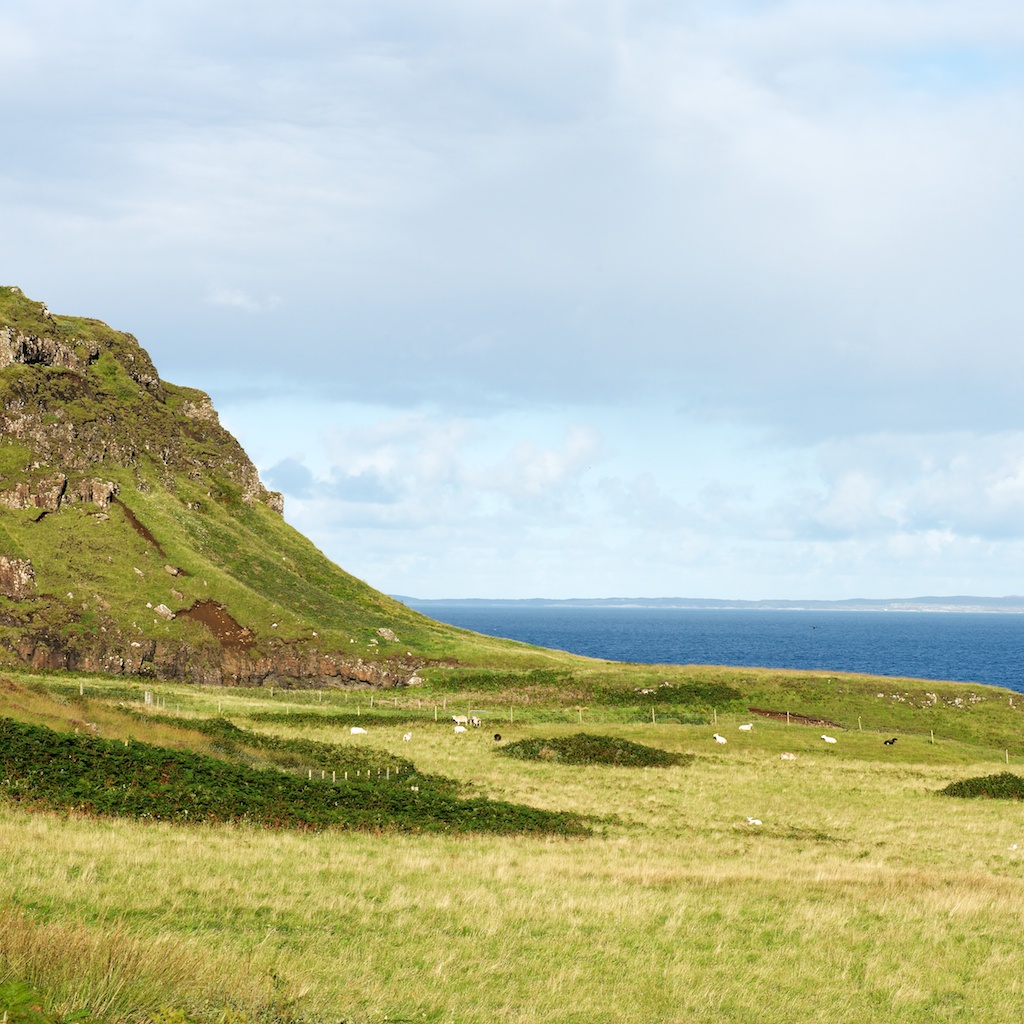
It was too good a start to the day to stay in the office so I hitched a ride with Farmer who was off to move some sheep and check the rest of the in-bye flock and the cows. The turf dykes of the late Medieval settlement in Scoma were looking beautiful in the sunshine. They used to be covered in bracken and it is good to see that last year's treatment was successful.
Farmer left me to take photographs whilst he went to shut a gate. But he came back to get me so he could show me some strange fungi he found in the in-between field.
It looked a little like a puffball to start with, but he touched it and it was quite sticky. I will look it up and see if I can ID it.
The strip of natural regeneration in between Scoma and New field is beginning to take off, which is good to see, though we do need to control the bracken. It has a good effect in slightly protecting the young trees from the deer though perhaps..
There are about 70 cheviots and zwarbtles in the New Field. I was worried they would have eaten all the Devils Bit Scabious and the Grass of Parnassus, but they haven't. And there is still plenty of grass for them to eat.
Farmer showed me the Figwort by the Haunn gate which had been pointed out to him by one of our regular guests. It is so named because its roots resemble figs.
The cows are in the Black Park. Their calves are being sold on Monday so they are suitably close to the farm building for sorting out tomorrow, Friday. They will be taken to the Traditional Breeds sale in Stirling. They were waiting by the gate as if to ask to move, but there is still a lot of grass for them to eat down, and it is really important for the conservation of the field, that they do that before moving on. If the grass is too long the sheep don't eat it.
Treshnish is a pheasant sanctuary! They are safe from shooting here, and it is always nice to see a young family of them. I know they aren't exactly rare in most of the country.. but we encourage them here.
The fields are taking a distinctly autumnal hue now. The bracken is turning but the heather is still flowering above the
Haunn cottages.
The tups were all looking quite settled. Lots of grass in their field.
Back in the Black Park, it was good to see that the cattle really don't affect the Devil's Bit Scabious. The brilliant blue flowers appear to hover above the grass creating a purple blue haze. Very challenging to photograph.
On Tuesday the last of our lambs were sold. It was another mixed day, some good prices but some not so good. We now have the cast ewes to sell, but that will not be until later in the month.
PS Yesterday we had a close encounter of the Grouse kind. Magical! Farmer calls them Mull's rarest birds, technically they probably aren't such - but we love to see them, and living here we tend to see Golden Eagles and WT Eagles more frequently than we see Grouse.
.jpg)
.jpg)

.jpg)

.jpg)


.jpg)




.jpg)


.jpg)


.jpg)